
Kit de réparation de filetage de vis de vidange V-COIL
Filetage de vis de vidange endommagé ? Voici comment le restaurer pas à pas.
Vous avez scanné le QR code sur le véhicule. Cette page contient tout ce dont vous avez besoin pour effectuer la réparation : brève explication, tutoriel vidéo, séquence d'images et réponses aux questions courantes.
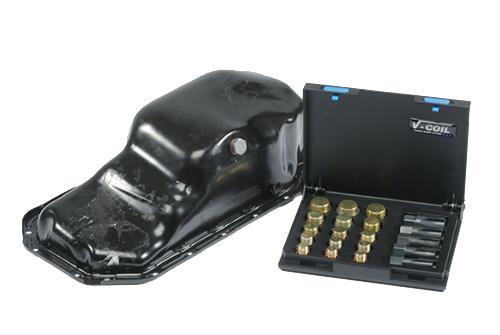
À quoi sert ce kit
Le kit de réparation de filetage de vis de vidange V-COIL est conçu pour réparer rapidement, proprement et de façon fiable les filetages de vis de vidange endommagés.
Réparer plutôt que remplacer
Restaurez les filetages de vidange endommagés et évitez souvent de remplacer le carter d'huile complet.
Travail sur le carter d'huile monté
Dans de nombreux cas, la réparation peut être effectuée directement sur le véhicule après la vidange de l'huile.
HexTap OS spécial
Taraud dédié aux vis de vidange pour créer un nouveau filetage de réception défini pour la nouvelle vis.
Vis neuves et rondelles d'étanchéité
Le kit comprend des vis de vidange neuves et les rondelles d'étanchéité adaptées aux applications courantes.
Pour l'aluminium et l'acier
Convient à de nombreux carters d'huile en aluminium et en acier – idéal pour les ateliers et les équipes de service.
Kit d'atelier compact
Tout réuni dans un coffret robuste – facile à ranger à l'atelier ou dans le véhicule de service.
Que contient le kit de réparation de filetage de vis de vidange ?
Un assortiment clair pour une tâche précise : restaurer le filetage de la vis de vidange.
Le filetage de la vis de vidange est ouvert et refermé à chaque vidange. Surtout dans les carters d'huile en aluminium, le filetage d'origine peut s'user ou s'arracher – la vis ne se serre alors plus correctement et de l'huile peut fuir.
Le Kit de réparation de filetage de vis de vidange V-COIL contient les principaux éléments nécessaires à une réparation pratique :
- Taraud spécial HexTap OS pour tarauder un nouveau filetage de réception pour la vis de vidange.
- Vis de vidange neuves dans les tailles métriques courantes (selon la version du kit).
- Rondelles d'étanchéité adaptées pour une étanchéité sûre et plane sur le carter d'huile.
Avec un cliquet, une clé dynamométrique et de l'huile moteur neuve, le kit vous permet de rétablir une liaison sûre et étanche.
Le processus de réparation en images animées
La vidéo montre toute la procédure : du filetage endommagé à la vis de vidange neuve montée. Idéal si vous êtes sous le véhicule et voulez suivre rapidement chaque étape.
Combinez la vidéo avec les étapes écrites ci-dessous et la séquence d'images plus bas sur la page.
Instructions pas à pas
La séquence suivante décrit la procédure de base. Respectez toujours les consignes du constructeur du véhicule.
-
Préparer le véhicule et vidanger l'huile.
Levez et immobilisez le véhicule en toute sécurité. Placez un bac de vidange sous le carter d'huile et vidangez complètement l'huile moteur. -
Retirer l'ancienne vis de vidange.
Dévissez le bouchon de vidange et nettoyez la zone autour du filetage endommagé (huile et saletés) pour pouvoir travailler clairement. -
Choisir le bon HexTap OS et tarauder le nouveau filetage de réception.
Choisissez le taraud adapté dans le kit. À l'aide d'un cliquet ou d'une clé, taraudez le nouveau filetage de réception bien droit dans l'alésage. Reculez régulièrement pour casser les copeaux. -
Éliminer les copeaux et nettoyer la surface d'étanchéité.
Retirez soigneusement les copeaux produits du filetage et de la surface d'étanchéité. Assurez-vous qu'aucun copeau ne reste dans le carter d'huile. -
Monter la nouvelle vis de vidange avec sa rondelle d'étanchéité.
Choisissez la vis et la rondelle d'étanchéité adaptées dans le kit. Huilez légèrement les filets, placez la rondelle sur la vis et vissez-la dans le nouveau filetage. Serrez avec une clé dynamométrique selon les indications du constructeur du véhicule. -
Refaire le plein d'huile et vérifier l'étanchéité.
Refaites le plein d'huile moteur, démarrez brièvement le moteur et vérifiez l'absence de fuite autour de la vis de vidange. Corrigez le couple si nécessaire.
Remarque : la procédure exacte peut varier selon le type de véhicule. En cas de doute, adressez-vous à un atelier spécialisé.
Sécurité & bonnes pratiques
- Travaillez uniquement sur un véhicule correctement calé et immobilisé.
- Portez un équipement de protection individuelle adapté (gants, lunettes de protection).
- Éliminez l'huile usagée et les filtres à huile conformément à la réglementation locale.
- Contrôlez à nouveau visuellement la vis de vidange lors du prochain entretien ou de la prochaine vidange.
Guide visuel : du kit à la vis de vidange serrée
Ces images montrent la séquence pratique : préparation, taraudage du nouveau filetage de réception et serrage de la nouvelle vis de vidange.
Aperçu du kit
Tous les composants réunis : HexTap OS, vis de vidange et rondelles d'étanchéité dans un coffret compact.
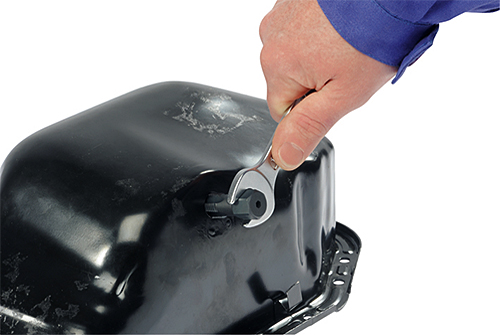
Taraudage depuis l'extérieur
Le HexTap OS est guidé depuis l'extérieur pour créer un nouveau filetage de réception dans l'alésage endommagé.
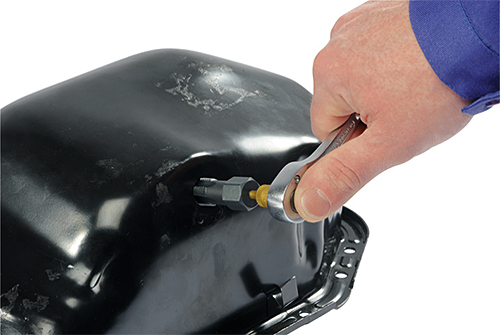
Vue du nouveau filetage
La vue intérieure montre le filetage fraîchement taraudé qui recevra ensuite la nouvelle vis de vidange.
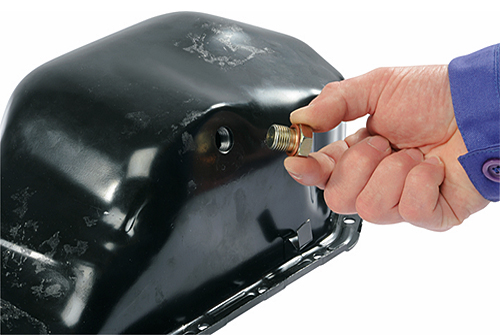
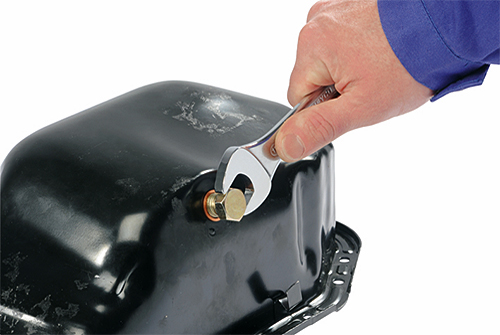
Serrer la nouvelle vis
La nouvelle vis de vidange avec sa rondelle d'étanchéité est serrée dans le filetage réparé au couple prescrit.
Sélection de vis et de rondelles d'étanchéité
Différentes vis de vidange et rondelles d'étanchéité du kit pour s'adapter à chaque véhicule.
Avantages techniques & pratiques
Un kit ciblé pour les ateliers, les équipes de service et les utilisateurs expérimentés qui veulent réparer plutôt que remplacer.
Solution qui fait gagner du temps
Aide à éviter un long remplacement du carter d'huile et réduit l'immobilisation du véhicule.
Étanchéité fiable
Une vis neuve et une rondelle d'étanchéité adaptée garantissent une liaison étanche et propre lorsqu'elles sont correctement montées.
Procédure claire
La vidéo, les étapes écrites et les images facilitent la réparation directement sur le véhicule.
Utilisation polyvalente
Convient à de nombreuses voitures particulières et utilitaires légers avec des filetages de vidange métriques courants.
Économique
Réparer des filetages endommagés plutôt que remplacer des composants complets est souvent plus économique.
Fait partie du système V-COIL
Complète d'autres solutions V-COIL pour la réparation de filetages automobiles, comme les filetages de bougies et de capteurs.
Questions fréquentes
Réponses courtes aux questions courantes directement au véhicule.
Dans de nombreux cas, non. Après la vidange et le nettoyage de la zone, le nouveau filetage de réception peut être taraudé directement sur le carter d'huile monté. Vérifiez toujours l'accessibilité et l'état général de la pièce avant de commencer.
Oui. Les carters d'huile en aluminium sont particulièrement sujets aux dommages de filetage au niveau de la vis de vidange. Le kit est bien adapté à ces cas. Procédez avec soin et serrez toujours avec une clé dynamométrique au couple prescrit.
Une clé dynamométrique est fortement recommandée. Elle aide à obtenir la bonne force de serrage, garantit une étanchéité correcte et réduit le risque d'endommager le filetage fraîchement taraudé ou la rondelle d'étanchéité.
Après avoir refait le plein d'huile moteur, laissez tourner le moteur brièvement et vérifiez l'absence de fuite autour de la vis de vidange. Contrôlez à nouveau après le premier trajet ainsi que lors du prochain entretien ou de la prochaine vidange.
Respectez toujours les consignes de sécurité, utilisez des outils adaptés et suivez les indications du constructeur du véhicule. En cas de doute, faites effectuer la réparation par un atelier spécialisé ou contactez notre support technique.