Skip to main content Skip to search Skip to main navigation
Application
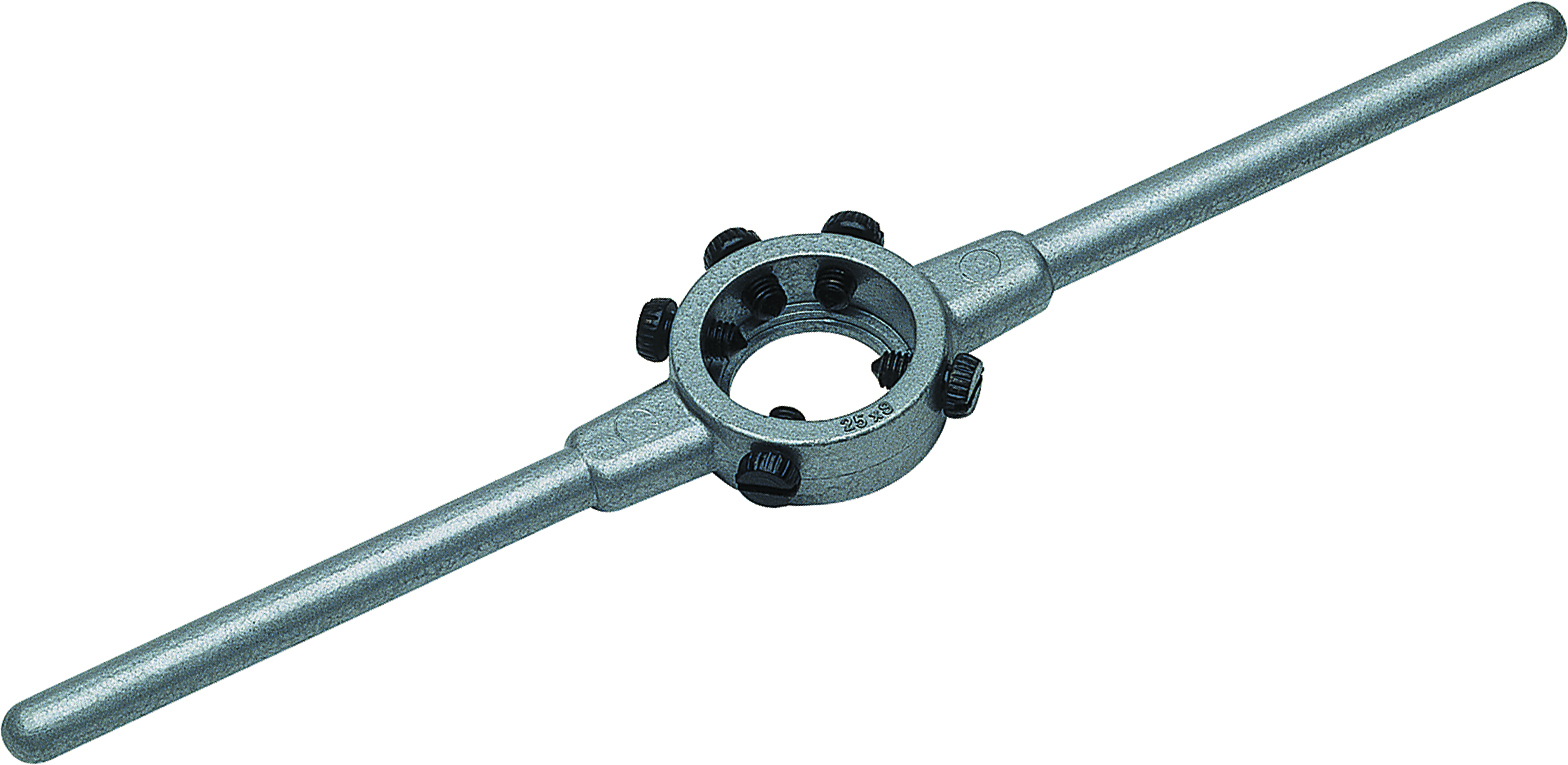
Die Stock Zinc die cast 16 x 5 mm | VÖLKEL

Die Stock Zinc die cast 16 x 5 mm

Use this accessory when you need a stable interface for taps or dies and you want repeatable alignment at the thread start. It is useful in service workshops and fabrication work.

Select a suitable holder and cutting fluid for your material so torque stays stable and the thread form remains consistent.

Application

  • Hold, guide, or drive threading tools so the cutting edges start square to the workpiece axis.
  • Use in workshop environments when alignment and repeatable torque control matter.
  • Secure the tool firmly so it does not tilt under load during the first thread turns.
  • Process: manual driving or assisted driving depending on your holder and machine setup
  • Use: thread cutting, re tapping, and thread cleaning depending on condition

Note Verify the workpiece preparation before you start and stop if torque increases unexpectedly.

Benefits

  • Improves alignment and reduces risk of cross-threading during thread start.
  • Supports controlled torque input when you work by hand or with assisted drive.
  • Speeds up tool changes and keeps the tool interface protected in regular use.
  • Helps maintain a consistent thread axis in repair and workshop work.
Drawbacks
  • Requires a correct match to your tool size and interface stated in the product name.
  • Not suitable for heavy industrial power tapping without a dedicated machine interface.

Step by step

  1. Select the accessory variant that matches the tool interface stated in the product name.
  2. Clean the clamping surfaces so the tool sits flat and does not tilt under load.
  3. Insert the tap or die fully and secure it with the provided clamping or locking feature.
  4. Align the assembly to the workpiece axis and support it so the first turns start square.
  5. Apply suitable cutting fluid to the cutting tool and start the operation with controlled torque.
  6. Re-adjust alignment if torque rises abruptly, then continue with steady feed.
  7. After use, remove the tool, clean all parts, and protect the clamping surfaces from corrosion.

Scope of supply

  • 1 piece Die Stock Zinc die cast 16 x 5 mm

Technical features

  • Tool type: Thread cutting die

Frequently asked questions (FAQ)

How do you select the correct tool variant from the product name?
Match the thread designation and standard stated in the product name to your drawing or the mating fastener. Confirm whether you need an internal or external thread tool and whether the thread is left hand or right hand.
How do you reduce the risk of cross-threading at the start?
Prepare a clean chamfer and keep the tool axis aligned with the hole or rod axis. Start with controlled torque and stop if the tool tilts or binds.
How do you store the tool between uses?
Keep the tool clean and dry and store it so the cutting edges or gauge threads are protected from impact.
How do you store the tool between uses?
Keep the tool clean and dry and store it so the cutting edges or gauge threads are protected from impact.
How do you store the tool between uses?
Keep the tool clean and dry and store it so the cutting edges or gauge threads are protected from impact.
Where can you find more product and application information in a catalog?
VD 23 catalog as PDF

Do you need help selecting or using the product?
Use the contact form.

Additional information
Standard DIN 225 (DIN EN 22568)
Material Zinc die cast
Size 16 x 5 mm
Length 160 mm
EAN 4022835150015
Item number 15001
Application 16 x 5 mm
Die Stock Zinc die cast 16 x 5 mm | VÖLKEL

Die Stock Zinc die cast 16 x 5 mm

Use this accessory when you need a stable interface for taps or dies and you want repeatable alignment at the thread start. It is useful in service workshops and fabrication work.

Select a suitable holder and cutting fluid for your material so torque stays stable and the thread form remains consistent.

Application

  • Hold, guide, or drive threading tools so the cutting edges start square to the workpiece axis.
  • Use in workshop environments when alignment and repeatable torque control matter.
  • Secure the tool firmly so it does not tilt under load during the first thread turns.
  • Process: manual driving or assisted driving depending on your holder and machine setup
  • Use: thread cutting, re tapping, and thread cleaning depending on condition

Note Verify the workpiece preparation before you start and stop if torque increases unexpectedly.

Benefits

  • Improves alignment and reduces risk of cross-threading during thread start.
  • Supports controlled torque input when you work by hand or with assisted drive.
  • Speeds up tool changes and keeps the tool interface protected in regular use.
  • Helps maintain a consistent thread axis in repair and workshop work.
Drawbacks
  • Requires a correct match to your tool size and interface stated in the product name.
  • Not suitable for heavy industrial power tapping without a dedicated machine interface.

Step by step

  1. Select the accessory variant that matches the tool interface stated in the product name.
  2. Clean the clamping surfaces so the tool sits flat and does not tilt under load.
  3. Insert the tap or die fully and secure it with the provided clamping or locking feature.
  4. Align the assembly to the workpiece axis and support it so the first turns start square.
  5. Apply suitable cutting fluid to the cutting tool and start the operation with controlled torque.
  6. Re-adjust alignment if torque rises abruptly, then continue with steady feed.
  7. After use, remove the tool, clean all parts, and protect the clamping surfaces from corrosion.

Scope of supply

  • 1 piece Die Stock Zinc die cast 16 x 5 mm

Technical features

  • Tool type: Thread cutting die

Frequently asked questions (FAQ)

How do you select the correct tool variant from the product name?
Match the thread designation and standard stated in the product name to your drawing or the mating fastener. Confirm whether you need an internal or external thread tool and whether the thread is left hand or right hand.
How do you reduce the risk of cross-threading at the start?
Prepare a clean chamfer and keep the tool axis aligned with the hole or rod axis. Start with controlled torque and stop if the tool tilts or binds.
How do you store the tool between uses?
Keep the tool clean and dry and store it so the cutting edges or gauge threads are protected from impact.
How do you store the tool between uses?
Keep the tool clean and dry and store it so the cutting edges or gauge threads are protected from impact.
How do you store the tool between uses?
Keep the tool clean and dry and store it so the cutting edges or gauge threads are protected from impact.
Where can you find more product and application information in a catalog?
VD 23 catalog as PDF

Do you need help selecting or using the product?
Use the contact form.

Die visible through a larger die.
Application consulting
Always the perfect product for your application situation
Request consulting