
DHLM 2026 · Nürburgring · Group A
MERCEDES
500 SEC
GROUP A
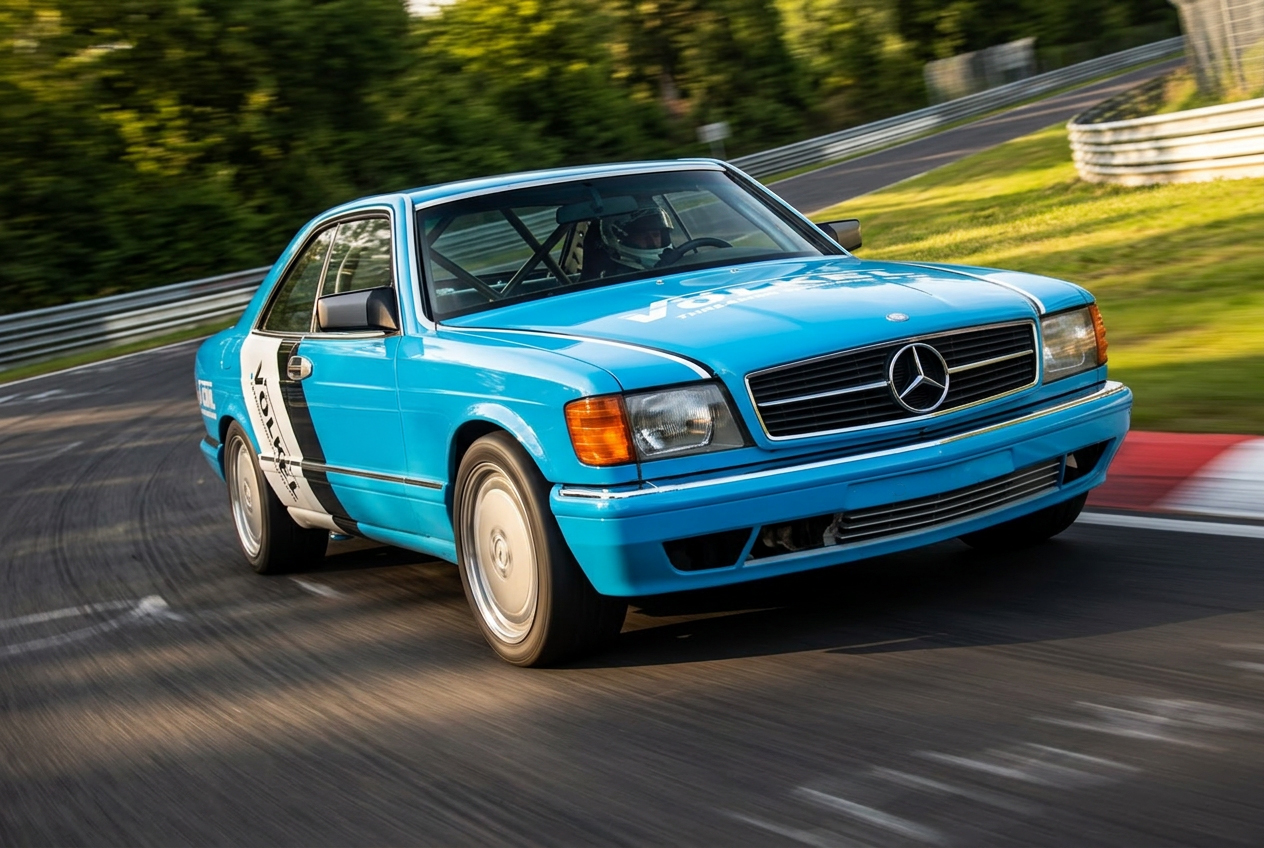
A luxury grand tourer becomes an endurance racer. The Völkel Racing Team is building the Mercedes-Benz 500 SEC C126 into a race car — not despite its size, but because of its character. 5.0 liters. Eight cylinders. Nürburgring.
ScrollThe Decision
From SLC
to SEC
The original idea was both romantic and consistent: a Mercedes-Benz 500 SLC, the R107-based coupé with which AMG and Hans Heyer won the overall standings in the 1980 Nürburgring endurance race. A reference point in German motorsport history. A car with a story.
Then came the regulations. The German Historic Endurance Championship classifies the SLC in a group that requires an automatic transmission — four gears, no manual control over the drivetrain. At the Nürburgring, where driver and gearbox need to communicate in real time, that is not a stylistic detail; it is a handicap.
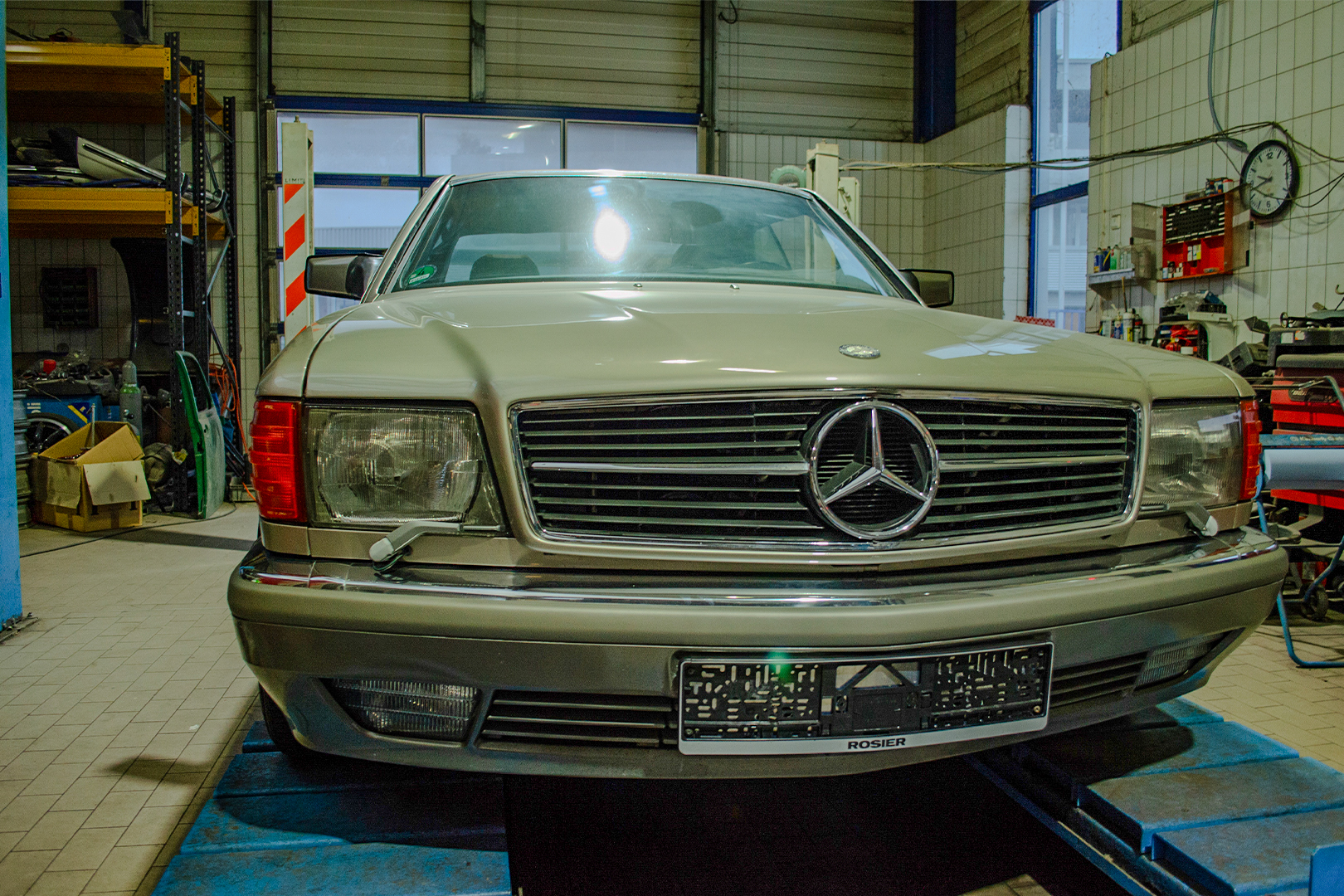
A precise reading of the regulations led to the solution: its successor, the 500 SEC on the C126 platform, is homologated for Group A. The same M117 V8 under the hood — but the homologation list includes a 5-speed and a 6-speed manual transmission. Same engine. More control. Better weapons.
Mercedes 500 SLC
- R107 / C107 platform
- AMG victory at the Nürburgring in 1980
- Approved only with a 4-speed automatic
- Older homologation class
- No manual transmission under the regulations
Mercedes 500 SEC
- C126 coupé, Group A
- Identical M117 V8, 5.0 liters
- 6-speed manual transmission homologated
- More modern Group A approval
- Direct successor to the AMG line
Historical Context
A coupé.
No compromise.
The Mercedes-Benz 500 SEC was never intended as a racing tool. It was the opposite: a rolling demonstration of what a German luxury coupé could do — on the Autobahn, on long journeys across Europe, in the rear window of a diplomatic escort. 1.7 tons. A wheelbase of four meters seventy. Leather seats you would wish for in a first-class aircraft.
And yet: the C126 was developed on the basis of the W126 S-Class, to this day one of the most technically ambitious Mercedes passenger cars of its era. The body is torsionally rigid, the front axle uses double wishbones, and the rear axle is a multi-link design Mercedes first tested in the compact class and then adapted for the S-Class.
What makes it interesting for the racetrack: It was built for speed — not for sprinting, but for endurance. The M117 is an engine with a broad torque plateau, not a high-revving machine. It develops its character between 2,000 and 5,000 rpm — exactly where endurance racing happens.
AMG had already recognized this in the early 1980s. The connection between the Affalterbach tuner and the large S-Class coupé platform is not a reinvention by the Völkel Racing Team. It is tradition.
In 1978, the AMG team entered the 450 SLC in the Baja 1000 — ending an era of disbelief toward large Mercedes coupés in motorsport. The Silver Arrow carrying the Mampe lettering became a symbol of German racing expertise outside the established brands.
The AMG victory with the 500 SLC at the Nürburgring in 1980 was proof: a heavy Mercedes coupé can do more than take part on Europe’s toughest race track — it can win. That victory was the direct historical precursor to the Völkel project.
The 5.0-liter M117 was developed in 1969 for the 280 SE 3.5 class and continuously refined over almost two decades. In its strongest production form, it delivers 231 hp — a respectable figure for a 1.7-ton coupé, but for a race car it primarily means one thing: durability and torque in one package.
Group A was the touring-car regulation framework of the FIA era from 1982 onward: production-based vehicles, at least 5,000 units produced, with tightly defined modification options. The C126 was produced in sufficient numbers — and homologated with a manual transmission. That makes it a legitimate and historically correct Group A car.
AMG & Mercedes in Motorsport
The heritage that
carries this project
AMG — The Beginnings
Hans Werner Aufrecht and Erhard Melcher founded AMG in Burgstall an der Murr. Their first racing project was a heavily modified Mercedes 300 SEL 6.3 that finished second overall at the 1971 24-hour race in Spa-Francorchamps — completely unexpectedly. The trade press called it the “Red Pig.” A large Mercedes coupé on the racetrack was never absurd from the start; it was a concept.
The SLC in the Rally World
AMG entered the 450 SLC in the Safari Rally and in South American endurance events. The car showed what a large Mercedes coupé could achieve even under extreme conditions. The V8 ran in the heat of Africa as calmly as in cool Europe. This thermal resilience was not coincidence — it was the result of an engine philosophy that valued durability over peak output.
Nürburgring — The Proof
Hans Heyer and the AMG team won the ADAC endurance race at the Nürburgring with the 500 SLC — on a circuit that spares neither car nor driver. The victory with a large production coupé remains one of the strongest arguments for the idea of a production car as an endurance runner. Forty years later, the Völkel Racing Team follows the same logic with the direct successor.
Technical Profile
M117.
Character
before power.
The 5.0-liter M117 is not a high-revving engine. It is the opposite: a long-stroke V8 with 96.5 mm bore and 85.0 mm stroke, delivering its maximum torque of around 400 Nm below 3,000 rpm. On the Nordschleife, that means: traction when accelerating out of slow corners and calm reserves on the Autobahn-like high-speed sections.
The C126’s weight is its biggest issue. More than 1,700 kilograms of curb weight cannot be argued away — but it can be managed. Mercedes developed the W126 platform with a mass distribution that places 54 percent of the weight on the front axle. For a coupé of this size, that is a surprisingly balanced value, giving the car predictable behavior even at higher speeds.
For endurance racing, durability is more important than peak power. In various derivatives, the M117 has covered up to 500,000 kilometers in production vehicles. It is not sharp, but it is reliable. And on the Nordschleife, reliability is the hardest currency.
All figures refer to the production configuration. The conversion into a race car follows the requirements of the DHLM class and the Group A regulations. Engine development is planned for later build stages.
Technical Build
From the road
to the racetrack
Gearbox Conversion
The core of the project. Without the 6-speed manual transmission, the SEC would be little more than a historic anecdote on the racetrack — with it, it becomes a tool. The homologated manual gearbox allows the driver to actively use the broad torque range of the M117: the right gear for every corner exit, every acceleration zone on the long Döttinger Höhe. Six cleanly spaced ratios. The gearbox does not change the power — it changes the character.
Safety Structure
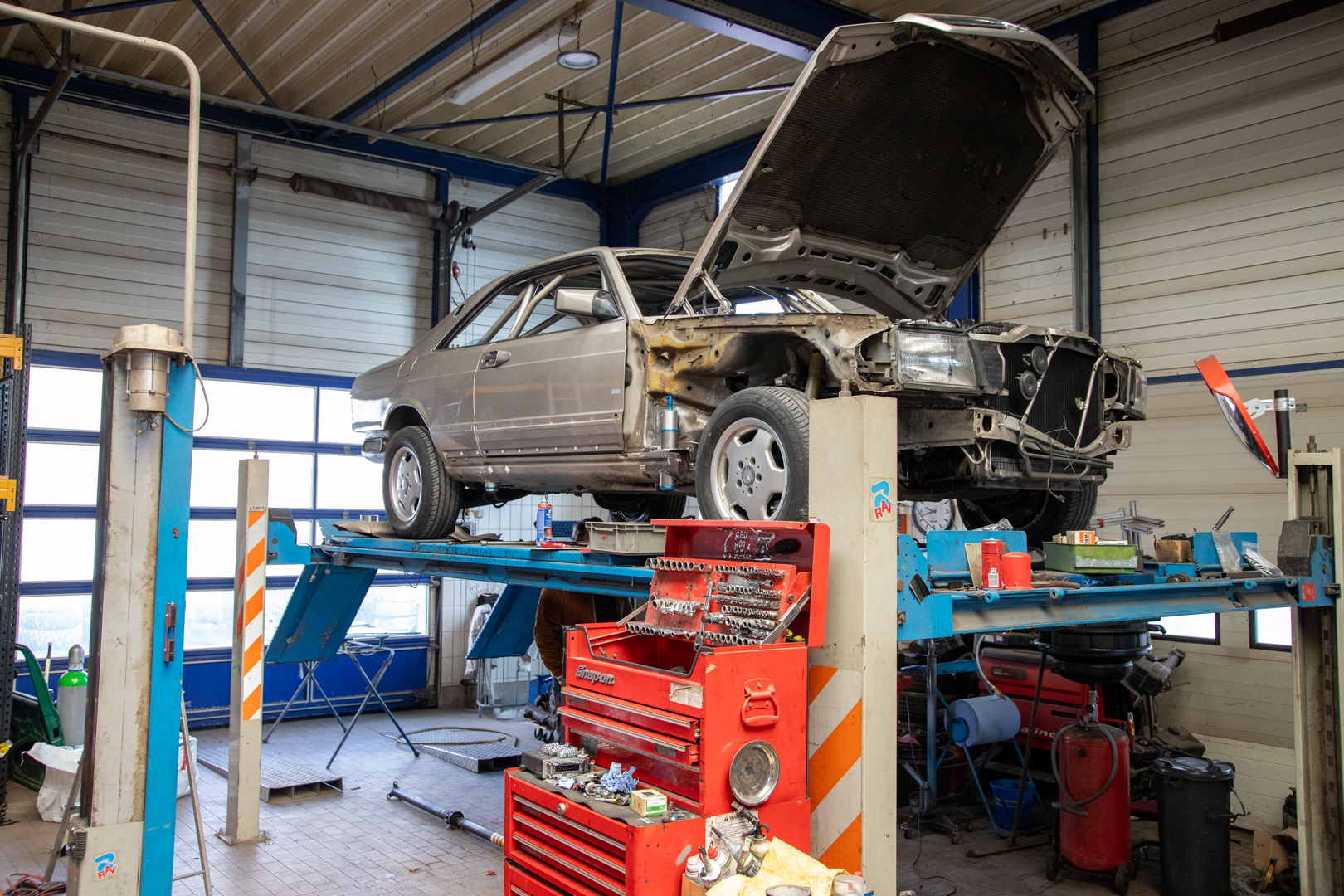
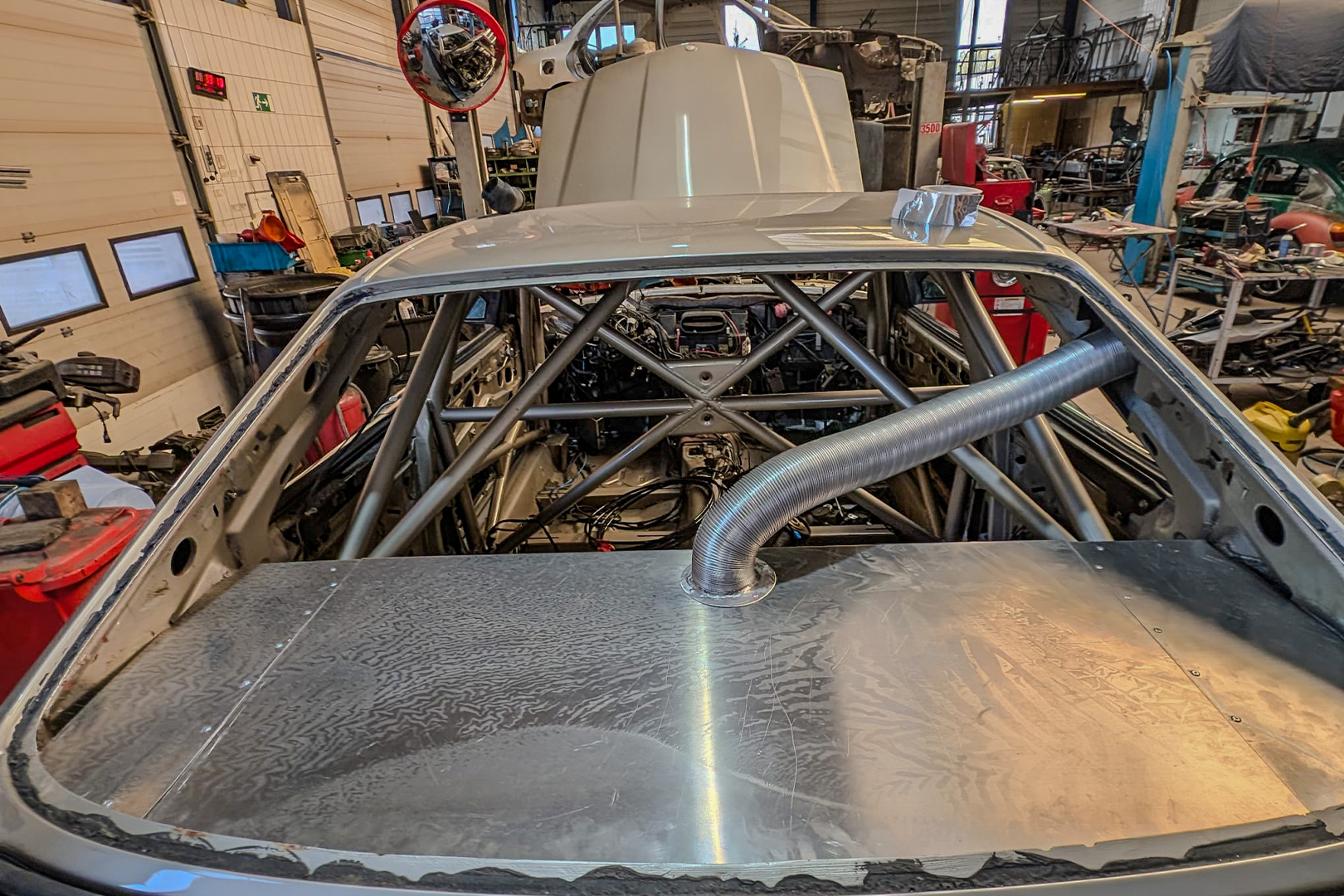
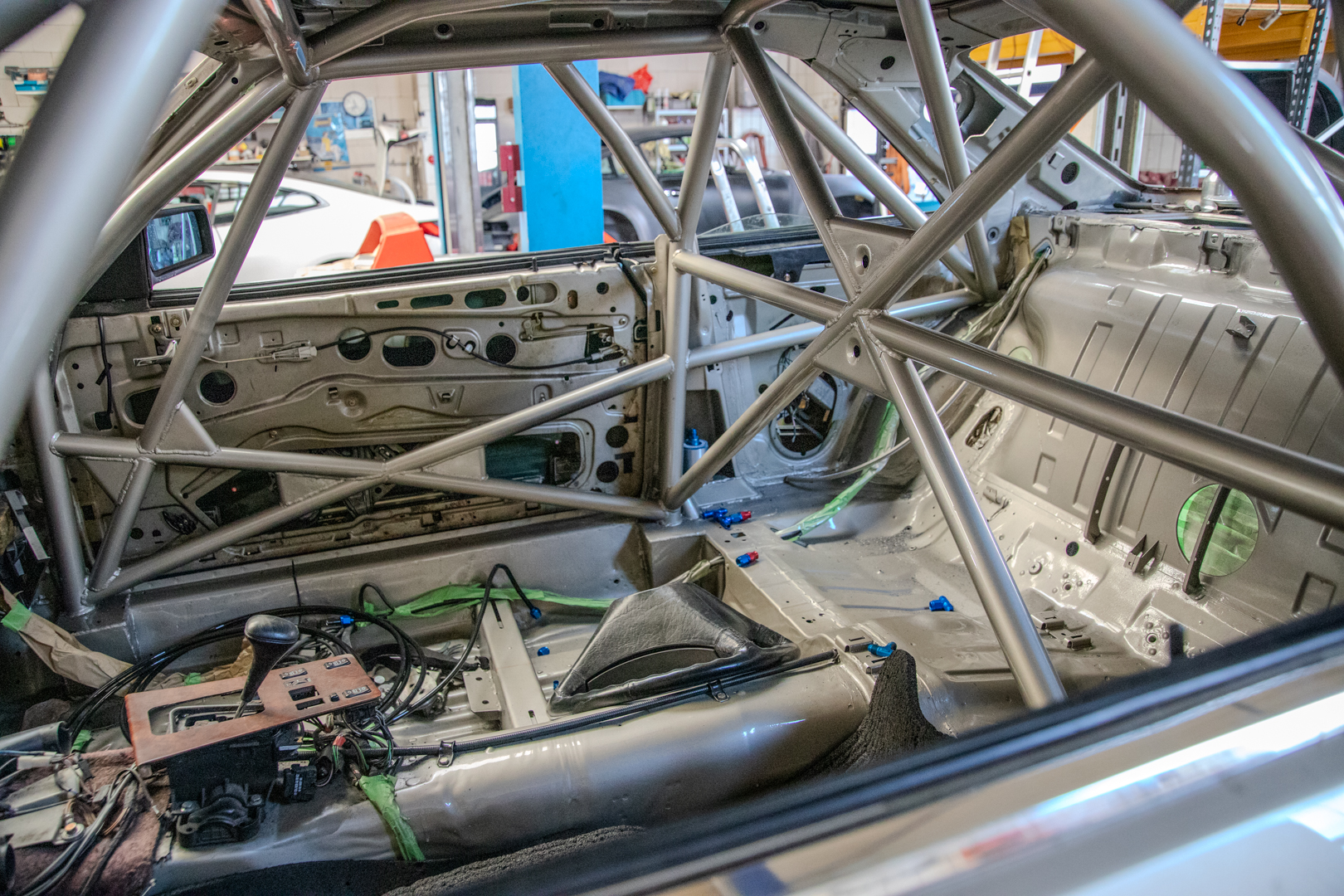
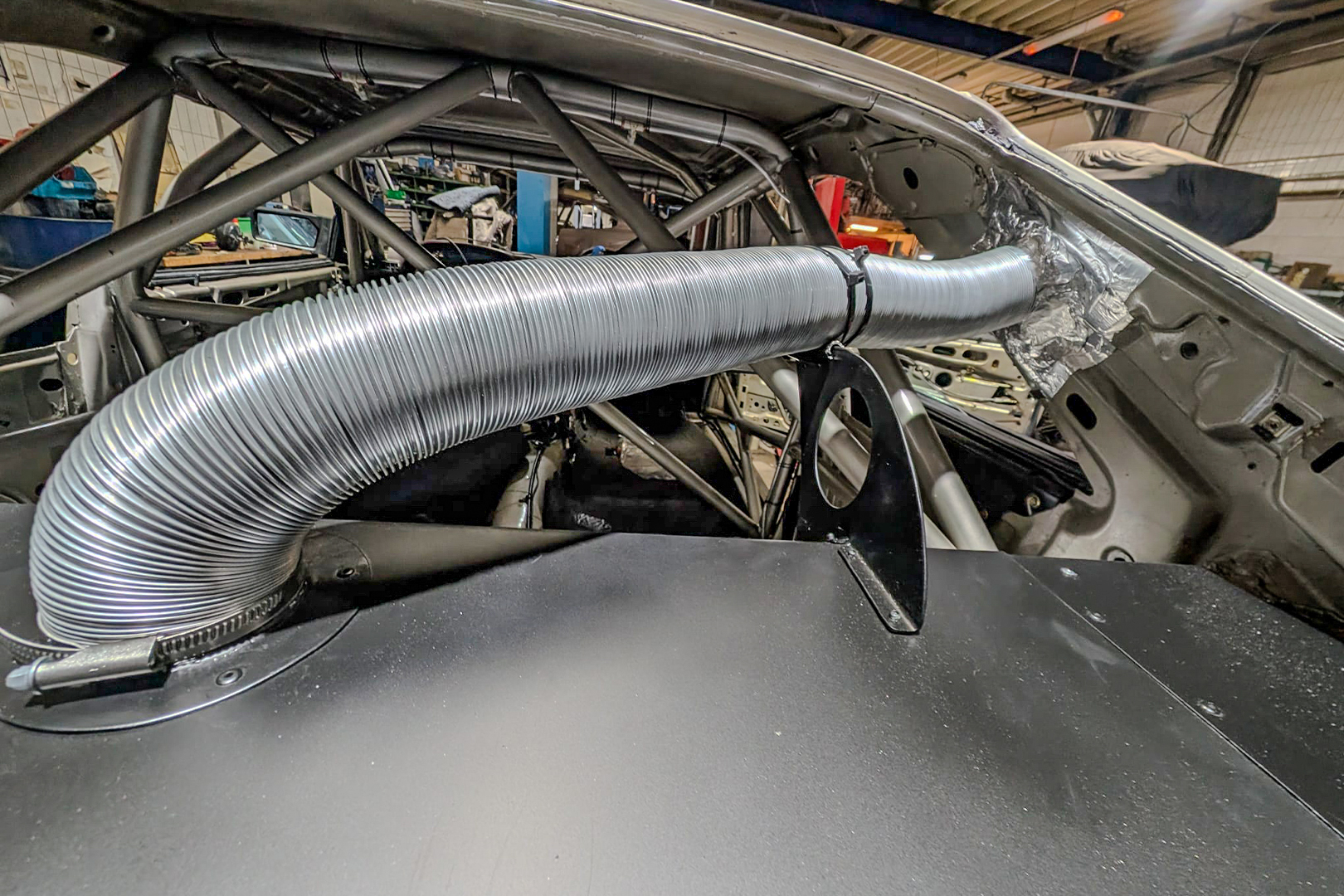
The roll cage is not an addition — it is the foundation. Welded into the body of the C126, it stiffens a structure that was designed for comfort in production form, not for torsional rigidity under racing conditions. FIA-homologated racing seats, a multi-point harness system, and a fixed fire-extinguishing system are added. The safety fuel cell replaces the production tank: no foam, no fiberglass compromise — but a solution that remains safe even in a rear impact.
Suspension & Wheels
The W126 platform comes with a multi-link rear axle as standard, developed by Mercedes for the S-Class generation — a design with far more racing potential than it ever shows in daily road use. The sport suspension adapts the geometry for circuit operation: stiffer springs, more precise damper tuning, optimized camber. Motorsport-capable wheels are added in a dimension that matches the tire range of the historic class.
M117 Engine
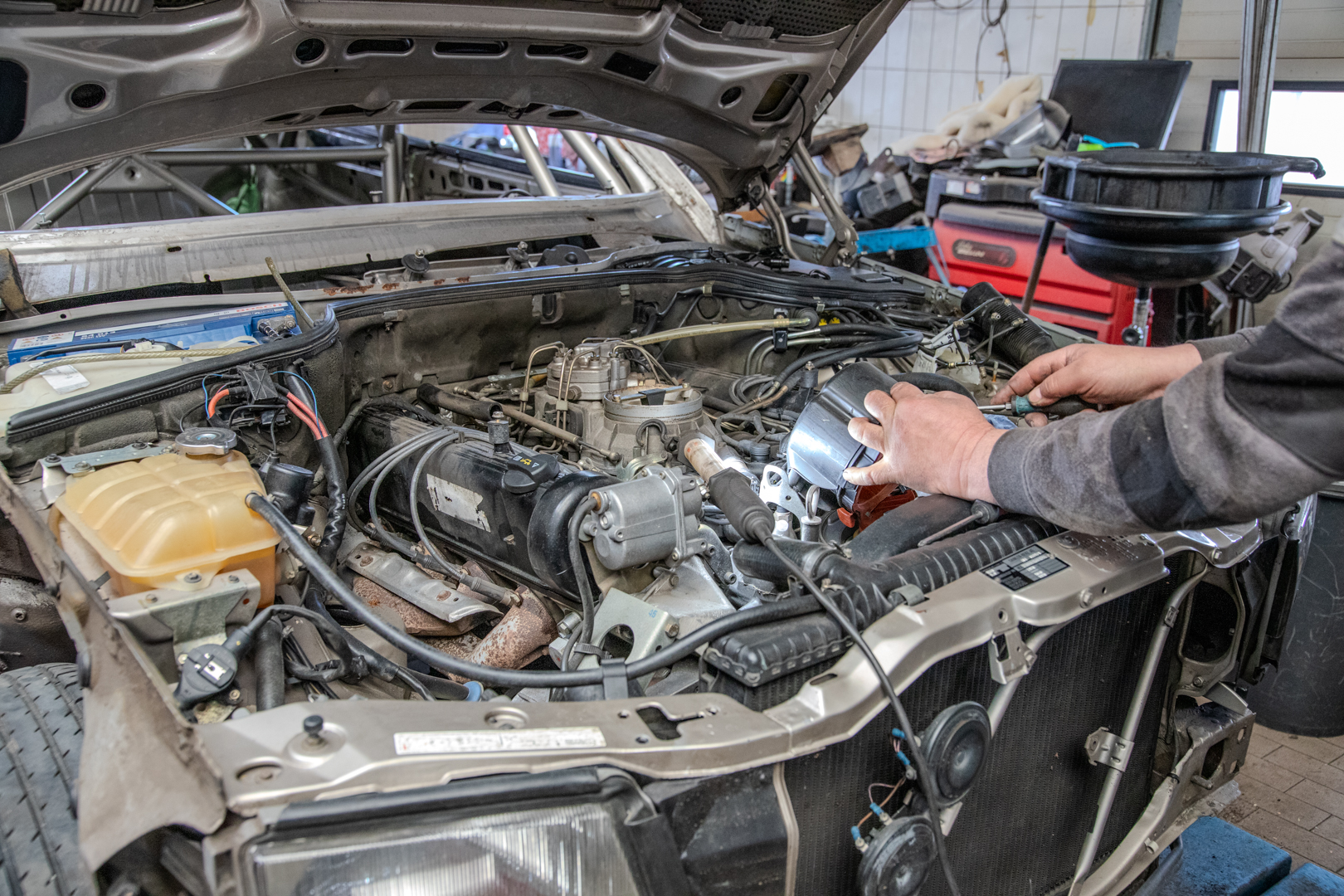
In the first build stage, the M117 remains standard — and that is a deliberate decision, not a cost-saving measure. The initial goal is to understand the complete package: how the car behaves on the Nordschleife, how the engine reacts under sustained thermal load, where the weight works and where it costs time. In this configuration, the M117 has more than enough character for the first outing. Development steps will follow based on real track data.
Exhaust System
A newly designed sport exhaust system for the V8 installation. In production form, the M117 sounds muted and cultured — that was a sales argument in 1984; today it is untapped potential. The race system lets the V8 breathe: a deeper underlying rumble at low revs, sharper overrun phases under braking, and a sound that gives the car identity at the Nürburgring. People will hear the Völkel SEC before they see it in the corner.
Homologation & Approval
The DHLM requires full compliance with the regulations — and for Group A, that means exact documentation of every modification against the original homologation file. Roll cage, safety fuel cell, tires, wheels, gearbox — everything must comply with the regulations and be verifiable. The team evaluated the C126 homologation documents before the first bolt was loosened. The build follows the paperwork — not the other way around.
Gallery
The Car
The Green Hell
Nürburgring.
Where character
counts.
The Nordschleife is 25.4 kilometers long, has 73 named corners, and an elevation profile that challenges everything at once — from drivetrain layout to braking system to aerodynamics. No modern circuit places so many different demands on a car at the same time.
And that is exactly why the 500 SEC belongs here. Not because it is fast — but because it is durable. The M117 keeps running even after twenty laps under full thermal pressure. The W126 platform was developed for long-distance strain. And the 6-speed gearbox gives the driver the tool this track demands.
The Nordschleife punishes cars that promise too much. It rewards those that deliver reliably. A 500 SEC that drives on the final lap exactly as it did on the first — that is the goal. Not qualifying, but the finish.
long before it comes into view.”
Project Timeline
The Road to the Race Car
First Idea — The SLC
The team plans to run a Mercedes 500 SLC. The inspiration is clear: AMG and Hans Heyer won at the Nürburgring in 1980 with exactly this car. Historical reference, clear direction.
Regulations Analysis
A detailed review reveals the problem: in its group, the SLC is approved only with a 4-speed automatic transmission. On the Nordschleife, that is not a question of style — it is a measurable competitive disadvantage.
Decision — 500 SEC
The solution lies in the homologation register: the 500 SEC (C126) is approved for Group A — with 5- and 6-speed manual transmissions. Same M117 V8, more modern homologation, more control. The decision is made within a week.
Vehicle Acquisition
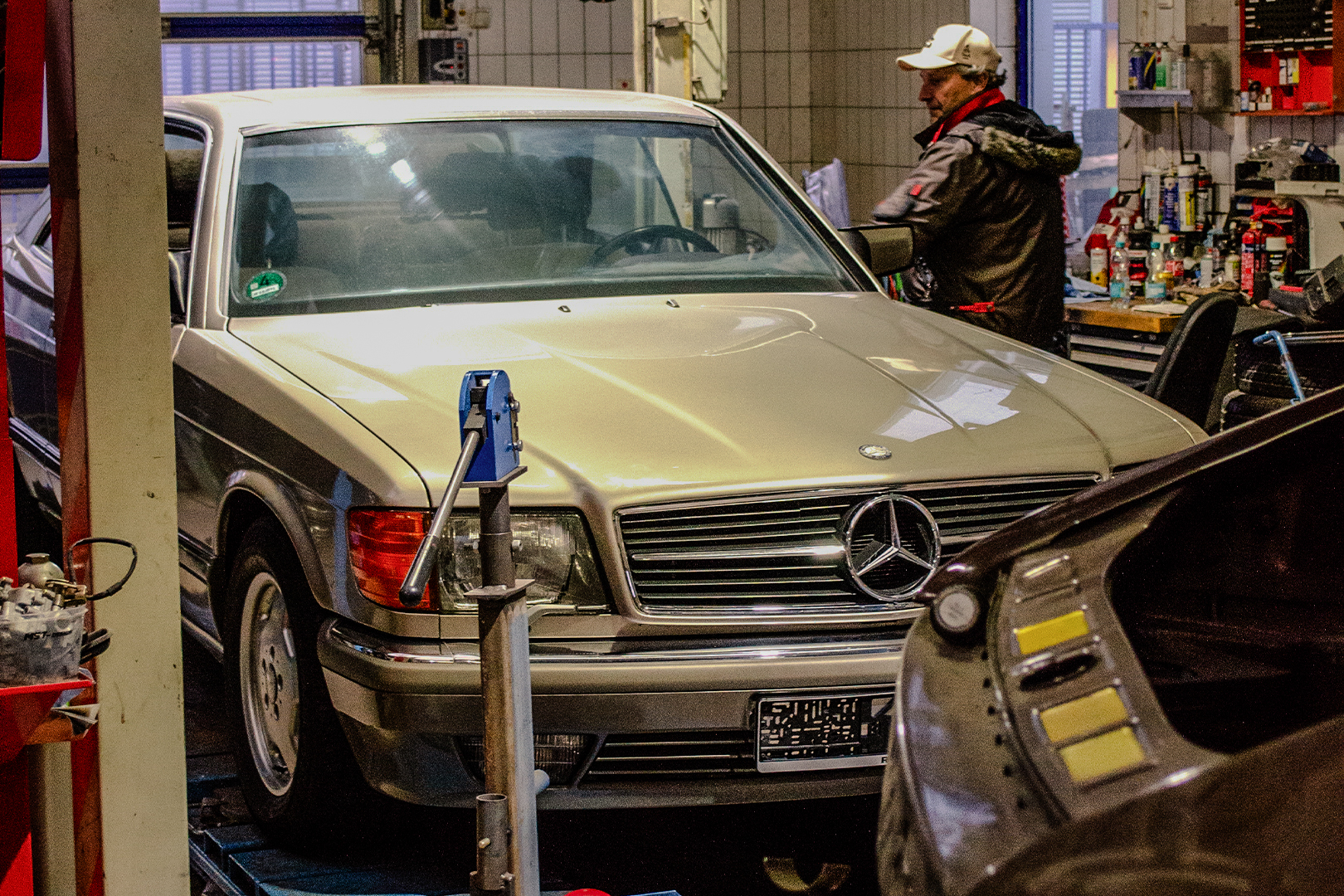
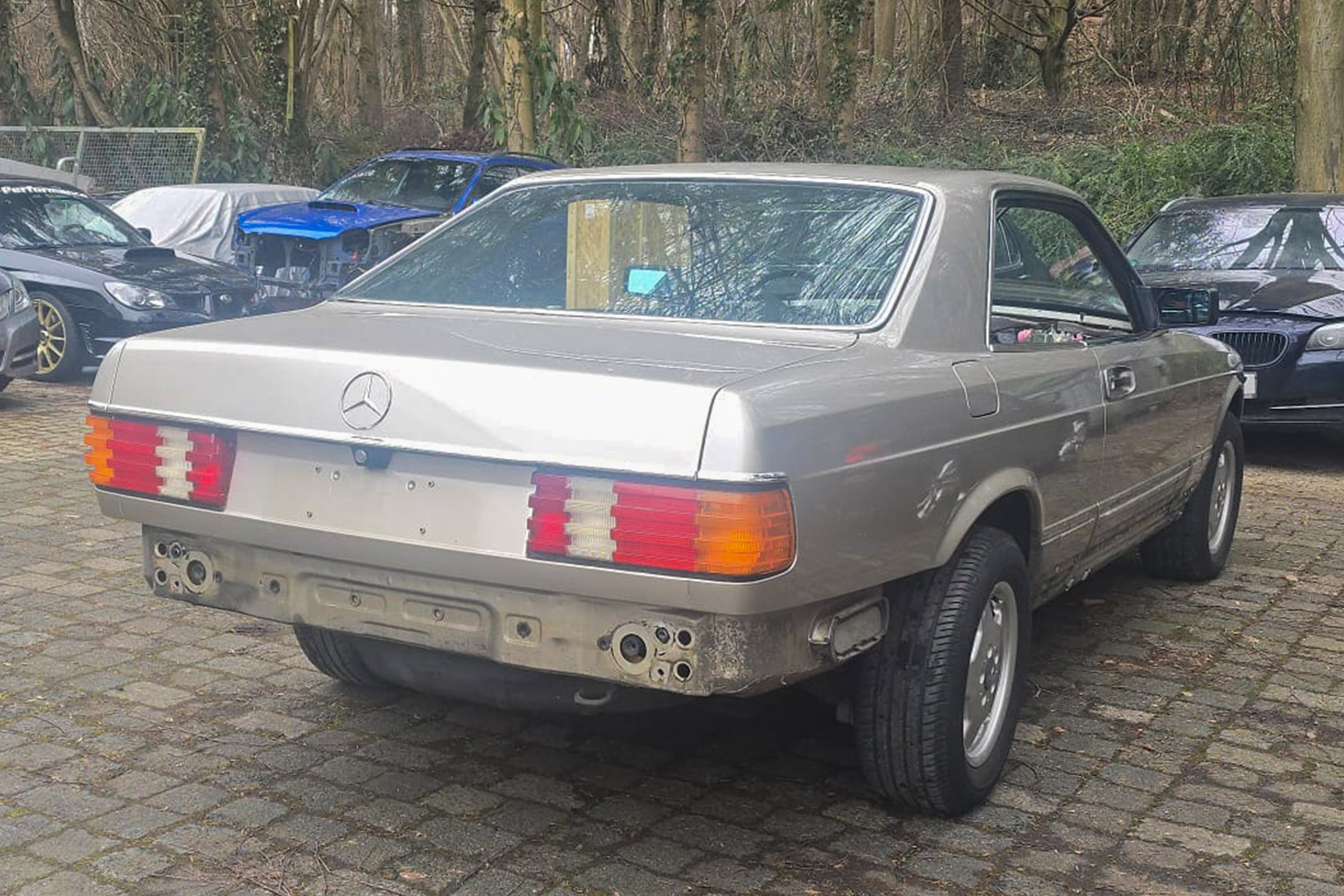
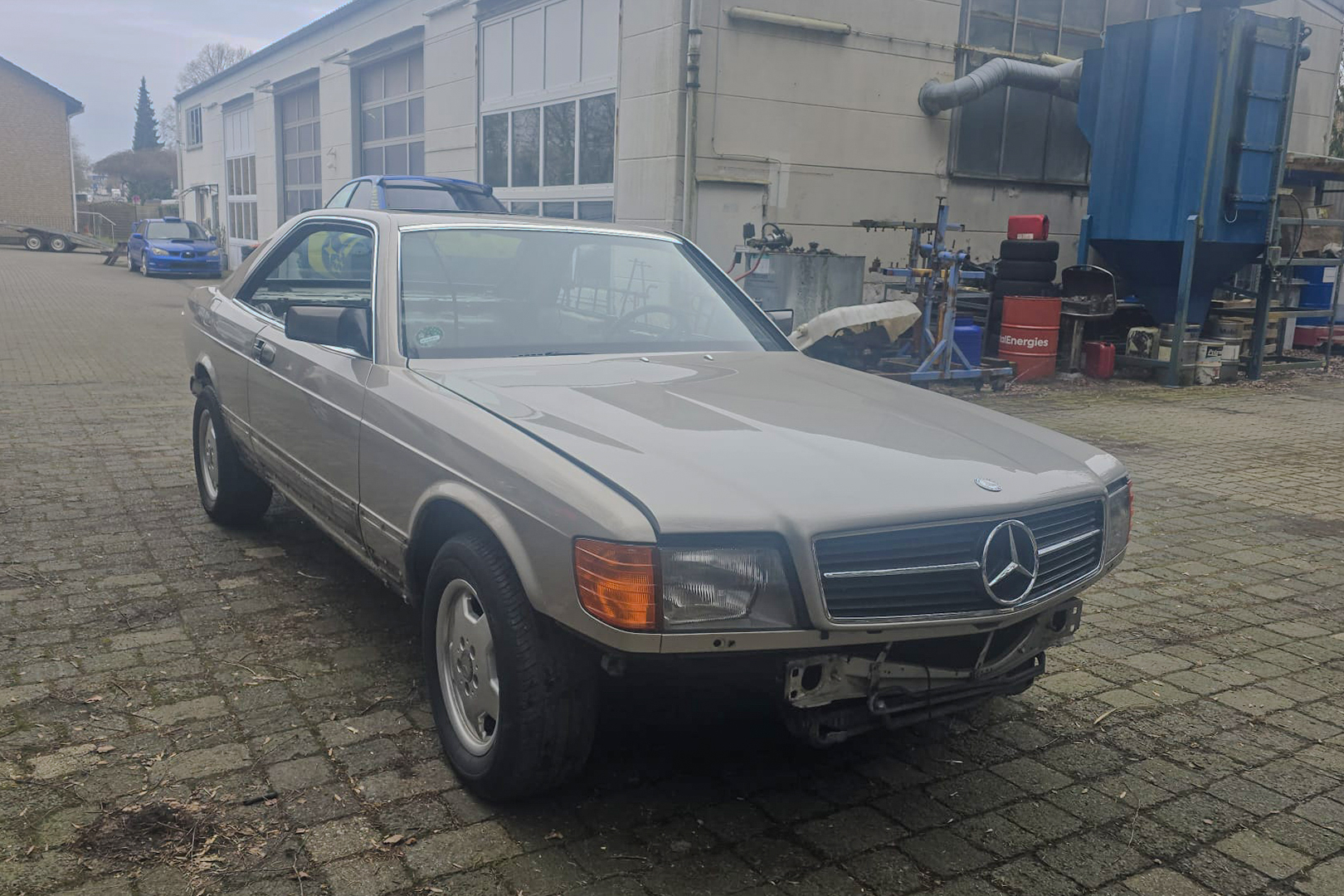
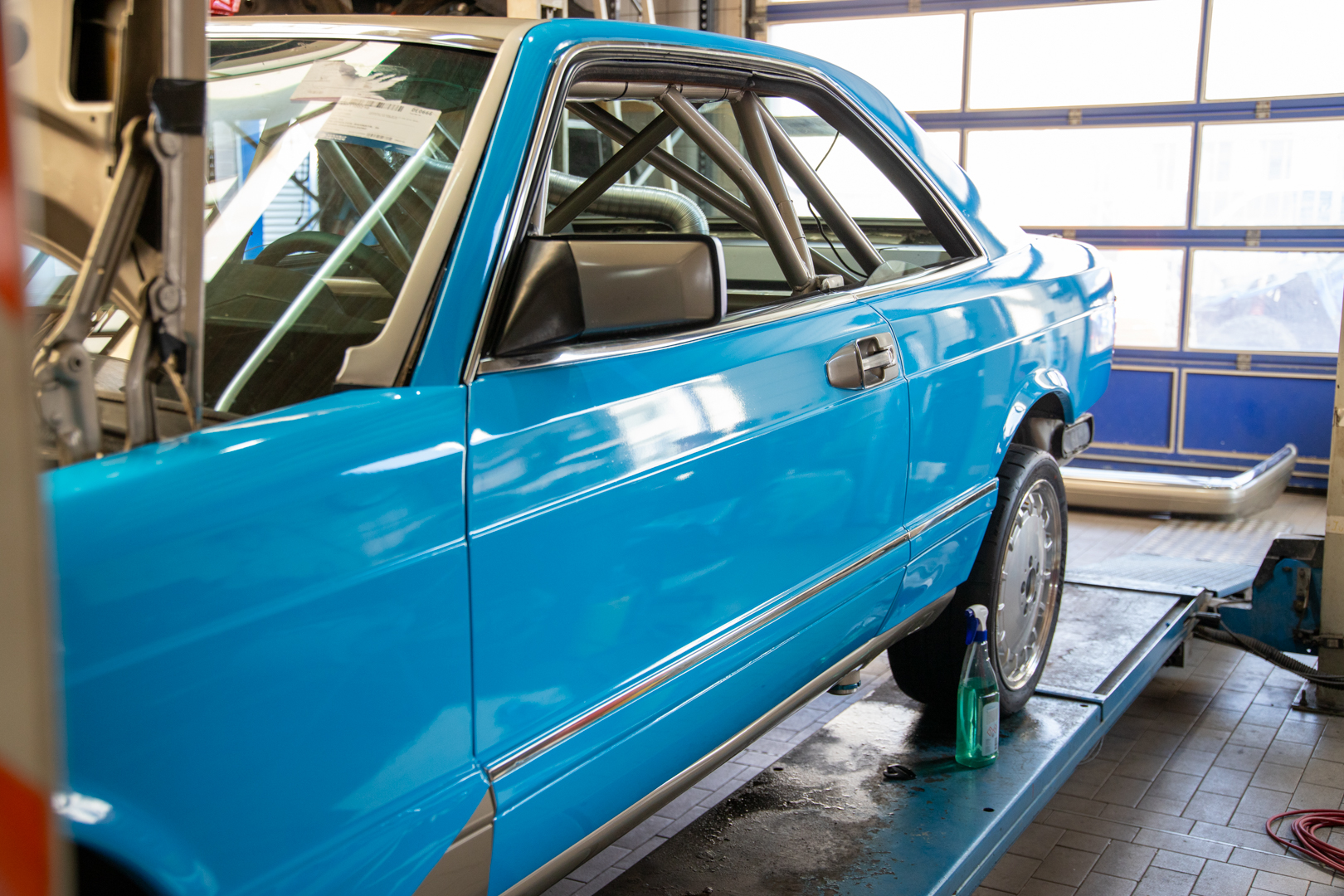
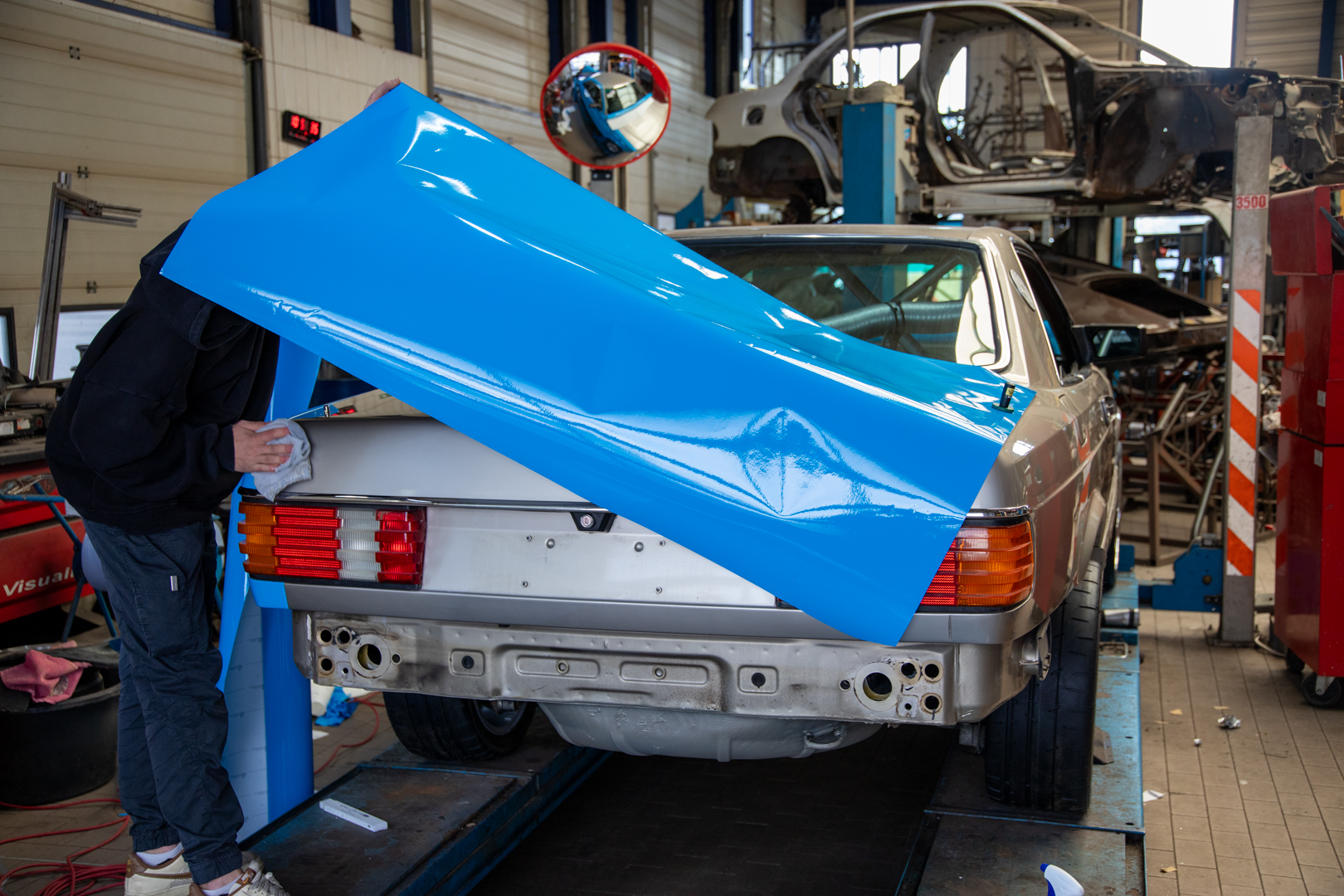
The team secures a suitable Mercedes 500 SEC C126 as the basis for the race build. Body, suspension, and engine are assessed. The M117 is in good condition — the starting point for everything that follows.
Gearbox Conversion
The central intervention: conversion to the homologated 6-speed manual transmission. A complex process requiring modifications to the transmission tunnel, shift linkage, and driveshaft. The result is a car the driver can actively control.
Safety Build
Installation of all safety components: welded roll cage, FIA racing seats with multi-point harness, fire-extinguishing system, and approved safety fuel cell. Motorsport standard on a historic basis — without compromise.
DHLM 2026 — First Start
The car enters the support program of the 24-hour race at the Nürburgring. In front of the maximum audience. On home ground. The first outing is not the end of the story — it is the beginning.
The V8 will deliver emotion — sound, power, and character. We will certainly have plenty of sympathy for the big eight-cylinder.
— Jörg Sand, Driver · Völkel Racing Team
The Series
DHLM 2026
The German Historic Endurance Championship is a direct response to a market gap: historic cars that no longer find a place in the current cost climate of the Nürburgring Endurance Series receive their own platform here — serious, regulated, and with a real competitive structure.
The unique feature: the DHLM runs exclusively at the Nürburgring. No other tracks, no touring circus — only the Nordschleife, the toughest and most honest testing ground European motorsport knows. The support program of the 24-hour race is the biggest stage historic motorsport in Germany can offer.
For the Völkel Racing Team from Remscheid, the Nürburgring is literally on the doorstep. That is not just an advantage for travel — it is home advantage on the track itself. Track knowledge, workshop proximity, home-game atmosphere.
- Exclusively at the Nürburgring — 25.4 km Nordschleife
- Support program of the 24-hour race · maximum audience
- Group A — historically correct vehicle class
- Plannable alternative to the cost-intensive NRS
- Home race for the team from Remscheid
The Driver
JÖRG
SAND
Jörg Sand is not in this project by coincidence. He conceived it, selected the car, evaluated the regulations, and personally pushed through the decision for the SEC over the SLC — because he understood the consequences of that choice for race use. This is not a driver stepping into a finished car. This is someone who built the car.
His knowledge of the Nordschleife and his familiarity with historic Mercedes vehicles make him the ideal choice for a build that demands technical understanding and driving sensitivity in equal measure. The first outing will not be the last.
"I am convinced that, with the big V8 and the manual gearbox, we have a competitive package — and one that will excite the spectators."
Völkel GmbH · Remscheid
Nürburgring.
Making
history.
A precision tool company from the Bergisches Land is converting a Mercedes-Benz luxury grand tourer into an endurance race car. This is not a marketing story. This is a racing project.
View the Official Project