In rocket engineering, it’s often not just the big picture that matters, but above all the quality in the details. This becomes especially clear in the manifold block for nitrous oxide in the BLAST project by HyEnD. Here, high pressures, critical fluids such as nitrous oxide (N₂O) and ethanol, and precise manufacturing all come together. A combination where threads do not simply connect components, but must reliably seal and function over the long term.
The manifold block performs several functions simultaneously. As a result, the requirements for the threads increase significantly – both in terms of precision and sealing performance.
For some time now, we at VÖLKEL Threading Solutions have been supporting the student team at the University of Stuttgart in the development of their hybrid rocket, gaining very concrete insights into what truly matters in such applications.
The Manifold Block as a Central Interface
Made from Aluminum 7075, the manifold block connects the nitrous oxide tank with the downstream piping system inside the rocket. At the same time, it fulfills several key functions:
- Connection to the nitrous oxide tank
- Sealing of the ethanol line
- Interface for nitrous oxide refueling
- Integration of temperature and pressure sensors
- Integration of the emergency relief valve
- Continuation to the main line towards the valve system
During operation, pressures of up to 125 bar act on the component. Accordingly, the requirements for each individual thread are extremely high.
Thread Cutting Under Demanding Conditions
Aluminum 7075 is well established in aerospace applications but places specific demands on thread cutting.
Surface Factor: Critical for Sealing Performance
Clean chip formation and a uniform surface finish are crucial, as they directly influence the reliable sealing of the thread. At the same time, the thread must be dimensionally accurate to ensure the long-term functionality of the component.
Typical challenges in practice include:
- Uncontrolled chip formation
- Built-up edge formation in aluminum
- Tool wear
- Inconsistent thread quality
Especially in a system operating at 125 bar, even minor deviations can quickly become a critical factor.
Precision Threading Solutions with VÖLKEL
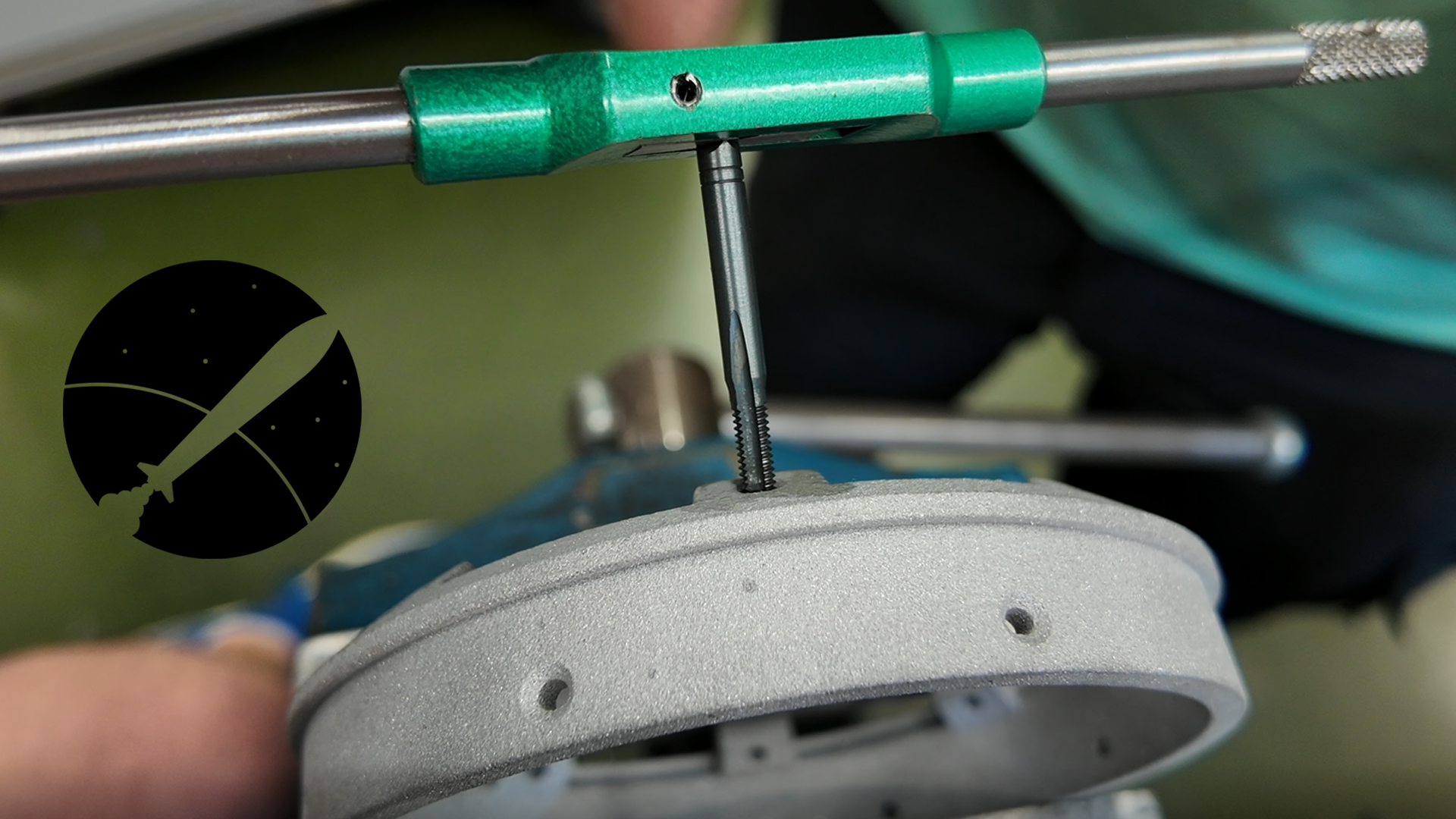
When cutting threads on the manifold block, the HyEnD team specifically relies on tools from our range. The following are used:
- VÖLKEL Hand Tap Set G (BSP) 3/8" HSS (Art. No. 55316) with additional vapor treatment
- VÖLKEL Hand Tap Set G (BSP) 1/4" HSS (Art. No. 55314) with additional vapor treatment
We deliberately chose to enhance the standard untreated HSS taps with an additional vapor treatment. This surface treatment reduces friction and supports clean chip evacuation. This is particularly crucial for Aluminum 7075 to achieve consistent and reproducible thread quality.
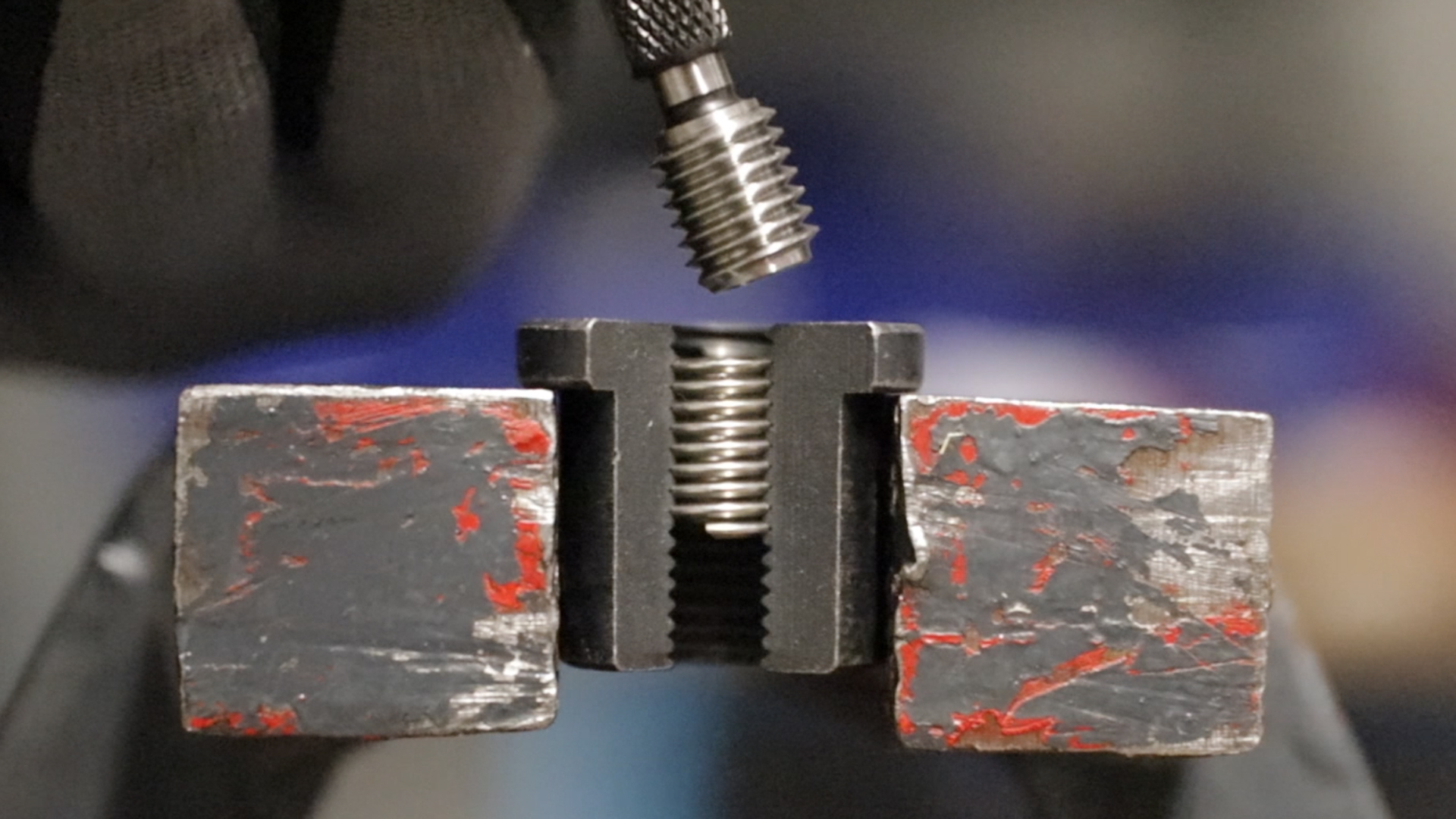
Another important aspect is the two-stage design. The thread is not cut in a single step but is built up in a controlled process. Pre-cutting and finishing work together seamlessly, ensuring uniform thread flanks.
In practice, this becomes immediately apparent: the threads are dimensionally accurate, quality remains consistent, and sealing performs reliably even under high pressure. This combination of tooling, process reliability, and results is exactly what we at VÖLKEL focus on.
Transferability to Practical Applications
What proves itself in rocket engineering also works in many industrial applications. Wherever aluminum is used and threads must reliably seal, similar requirements apply.
Typical application areas are:
- Hydraulic systems
- Mechanical engineering
- Prototype manufacturing
- Aerospace
Here too, it becomes clear that it is not just about the thread itself, but about the right interaction between material, tool, and application.
Conclusion
The collaboration with HyEnD impressively demonstrates how important clean threading technology is in demanding applications. The manifold block of the BLAST rocket clearly shows what matters in thread cutting: material, pressure, and function place high demands on every single thread. Especially under conditions such as 125 bar, every detail ultimately matters.
With the right solutions from VÖLKEL, these requirements can be reliably implemented. The application in the HyEnD project once again confirms for us that our threading tools prove themselves not only in everyday industrial use, but also under extreme conditions.
For us, it is particularly exciting to see how our tools are used in such a complex project and perform reliably there. We are proud to be part of this project and look forward to continuing to support the HyEnD team on their journey.